






Bank Holidays in France
Custom Search

Bank Holidays in France

No introduction to France would be complete without mentioning the public holidays and fêtes. It is important to know when these holidays occur, since many public services will shut down or run reduced services, whilst private commerce comes to a stand-still. Transport is often heavily booked in advance at holiday periods.

Although the provision of public holidays is generous, they are rigidly linked to the precise date. If a holiday falls on a Saturday or Sunday, then it is observed on that day, and no working day is given in lieu. However, if a holiday falls on either a Thursday or a Tuesday, then many people will take the link day to make a long week-end. This is known as faire le pont - literally to make a bridge.

The Fête Nationale (Bastille day) on the 14th July is always accompanied by huge public street parties in Paris and throughout France. Popular balls are organised at local fire-stations (bals des sapeurs pompiers) on the night of the 13th July. There are usually other free open-air parties not only in Paris but also in major cities. On the 14th July, France parades her military glory along the Champs-Elysées under the President's scrutiny, before the traditional garden party at the Elysée Palace, and a magnificent son et lumière firework display near to the Eiffel Tower.

On the 21st June each year (once again strictly observed on that date) is the newer Fête de la Musique. Although not a public holiday, it is an extremely popular occasion when free concerts are given in almost every church and cafe and seemingly on every street corner. The fete was created to encourage music-making (faites de la musique - a French play on words), and has been a tremendous success with vast open-air concerts in the major cities.

At the beginning of September each year are the traditional Journées du Patrimoine (National Heritage weekend), commonly known as les Portes-Ouvertes (the 'Open Doors'). Another recently invented festival, this is the annual occasion when the public can view the great state residences and buildings normally closed to the public, including the Elysée Palace in Paris, the Assemblee Nationale, and many embassies usually on restricted access. Local mairies (town halls) will be able to tell you where to find lists of buildings open to the public. The concept of this festival has recently been imported to the United Kingdom.

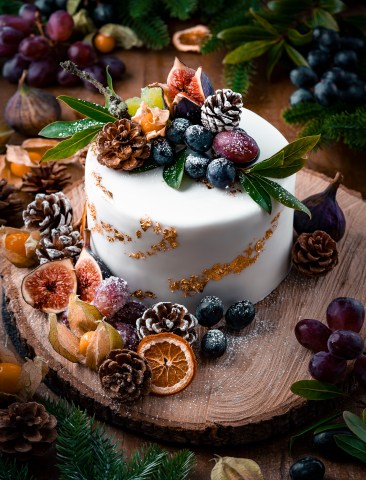
The main Christmas meal in France takes place on Christmas Eve, when the family and perhaps close friends gather for le réveillon (the vigil) meal. Traditionally the meal will include rich elements such as oysters (huîtres) and French specialities such as Champagne, foie gras and truffles (truffes). The traditional French Christmas dessert is a bûche de noël, a sweet 'Christmas log' cake which may contain alcohol. Many families then go to the packed churches for Midnight Mass. You then have a week to recover from the meal (even though only Christmas Day is a holiday in France), before the second reveillon (sometimes known as St Sylvestre), on New Year's Eve. This meal is often five or six courses long, including similar elements to the Christmas meal. You should note that in France greetings cards are traditionally sent to celebrate the New Year, not Christmas itself. You can send cards right up until the end of January. You should reply to each card that you receive with a card of your own. The French are also great fans of telephoning to present their best wishes for the New Year. Christmas celebrations continue on January 6th with the feast of the Epiphany (Fête des Rois), when almond pastry tarts (galettes) are eaten in homes and offices. By tradition the portions are distributed by the youngest person, calling out from underneath a table! The cake contains a small prize (feve), and the person who finds the prize is 'crowned' king or queen with the paper crown supplied with the cake. Christmas finally finishes on February 2nd with the feast of Candlemas (Chandeleurs), which is the real French Pancake Day, despite the world famous Mardi Gras (greasy Tuesday) before Lent.

view basket | your account | request catalogue